
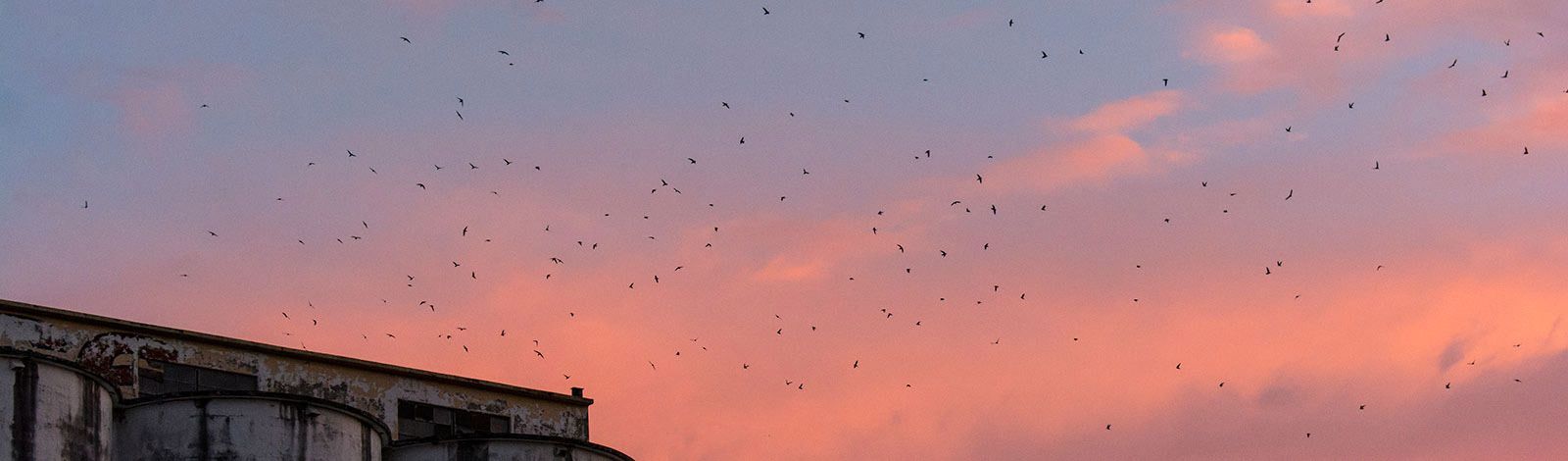
Houston Swift Night Out 2026 Events
Ben Cvengros/Audubon Photography Awards
Bellaire: Monday, August 31, 2026
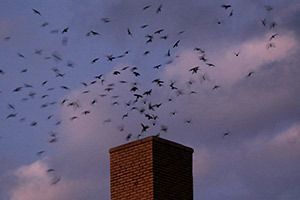
Meet at 7:30 pm. Location: either Whole Foods Market at 4004 Bellaire Blvd, Houston TX 77025 or Pershing Middle School. Please check back for the exact location which will be posted on August 29. The meeting spot for Pershing Middle School is the parking lot on the north side which has a view of the chimney. The parking lot is off Stella Link Rd, just south of Bellefontaine St. The meeting spot for Whole Foods is their parking lot.
Hosted by Nature Discovery Center and Birds Houston. Don't forget your folding chair and water!
Rice University: Wednesday, September 30, 2026
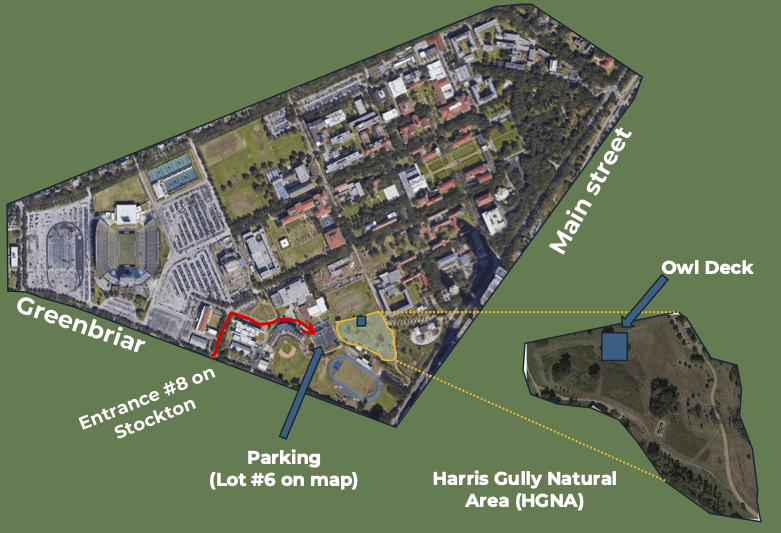
Meet at 6:30 pm at the Owl Deck to visit Rice's Lenn R. Lowrey Arboretum. At 7:00 pm we will view the swifts at Tudor Fieldhouse. Parking Lot 6 will be available for our use, 6-8 pm. Google map of parking lot and surrounding area.
Hosted by Birds Houston, Nature Discovery Center, and Rice's Lenn R. Lowrey Arboretum.
What is Swift Night Out?
Get ready for an amazing evening with nature's aerial acrobats! Our family-friendly Swift Night Out events offer a unique chance to witness the incredible lives of Chimney Swifts. These remarkable birds spend nearly their entire lives on the wing, only pausing to roost or nest. They even bathe in flight, gliding down to the water's surface and smacking against it, then bouncing back up and shaking the water from their feathers as they do so. Unlike most birds, Chimney Swifts can't perch; their specialized long claws are perfectly adapted for clinging to vertical surfaces. Historically these birds nested in hollow trees, but they’ve lost much of their natural habitat to development. The birds adapted to nesting in chimneys and are now dependent on manmade structures for nesting. Look out for these energetic birds in the late afternoon and evening, foraging in small flocks high above urban and suburban areas as well as rivers, lakes, forests, and fields.
At our Swift Night Out, we’ll gather to watch these captivating birds swoop and soar over their roosts and will count them as they enter their chimney. Bring a folding chair and mosquito repellent. Binoculars are optional; you'll be able to see the swifts clearly with the naked eye as they enter the chimney.
Nationwide Swift Night Out
A Swift Night Out is a continent-wide effort to raise awareness about and encourage interest in Chimney Swifts. Held in the fall when the birds are gathering in large numbers in preparation for their migration, participants at a Swift Night Out event meet at dusk to observe the captivating birds swoop and soar over their communal roosts. The birds are counted as they enter the roost (typically old chimneys), collecting valuable data to aid conservation efforts. The aerial display is a visual delight that everyone should experience!
Tips on Counting Swifts by Paul and Georgean Kyle: When counting Chimney Swifts at roosts, the numbers can become overwhelming -- especially as the numbers continue to climb as we move toward fall migration over the next few weeks. What we have found to work quite well is to use an athletic lap counter. These are available at most sporting goods stores. You can tally without taking your eyes off the swifts. When the numbers of swifts are relatively low, a direct count can be made -- one click per swift. At sites where the numbers exceed several hundred (or the entry rate is high), make one click per 10 swifts and multiply the end number of clicks by 10 for the total. It works really well if several counters can average their counts at the end.
About Chimney Swifts
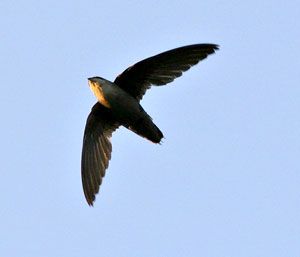
© Greg Lavaty
Chimney Swifts are small birds with slender bodies and very long, narrow, curved wings. Nicknamed “flying cigars”, Chimney Swifts are among the most aerial of birds, flying almost constantly except when roosting overnight and nesting. Unable to perch like songbirds, their long claws are adapted for clinging to the walls of chimneys and other vertical surfaces.
Nesting and Roosting
Chimney Swifts historically nested and roosted in hollow trees; however, they lost their natural habitat when old-growth forests were cleared for development. The birds adapted to using masonry chimneys and other man-made structures for nesting. Chimney Swifts construct their nests by attaching small twigs to the chimney wall with their glue-like saliva. Their half-cup nests hold three to five white eggs.
Feeding
Chimney Swifts eat almost 1/3 of their body weight in insects each day. They catch mosquitoes, flies, termites and other flying insects on the wing.
Migration
Chimney Swifts are Neotropical migrants; they breed in North America and winter in South America. During the breeding season, birds remain in pairs or small family groups, but may amass in the thousands during migration. Long-distant migrants, Chimney Swifts winter in the upper Amazon basin of Peru, Ecuador, Chile and Brazil.
Conservation
Despite their initial adaptability to human activity, Chimney Swifts are currently facing significant population declines. Reasons for the decline include loss of man-made nesting and roosting structures, insecticide use and habitat loss on their wintering grounds.
How to Help
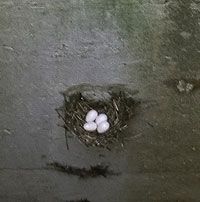
Chimney Swift nest courtesy of Don Verser
- If you have a brick or clay tile chimney, keep the flue closed and the cap open from March-November to allow nesting. Metal chimneys should be permanently capped to prevent birds from getting trapped in your home.
- Have your chimney cleaned or swept before the birds arrive in March for breeding season. Note: It is illegal to remove Chimney Swifts while they are nesting.
- Consider building a Chimney Swift tower or working with a local conservation group to construct a tower in your neighborhood to provide critical habitat for swifts
- Educate your friends and neighbors about Chimney Swifts!