

Yaupon
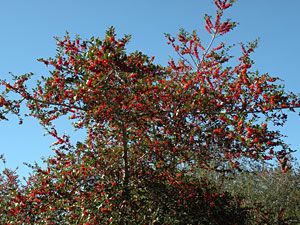
Ilex vomitoria
Family: Aquifoliaceae (Holly Family)
Yaupon is an evergreen holly. Plants spread to form thickets. Only the female plants have berries. Yaupon is drought-tolerant and an ideal plant for the Upper Texas Coast. If you want to transplant volunteers, move them when they are only a few inches high. Older plants establish taproots and are difficult to transplant.
- Scientific Name: Ilex vomitoria
- Common Names: Yaupon, Yaupon Holly, Cassina
- Family: Aquifoliaceae (Holly Family)
- Growth Habit: Shrub/ Small Tree
- Height: 12-45 feet. Typically no higher than 25 feet
- Leaves: Elliptic, Ovate
- Bloom Color: White
- Bloom Time: April, May
- Wildlife Benefits: The blooms attract native pollinators. The berries are devoured in winter and early spring by American Robins, Northern Mockingbirds, and Cedar Waxwings, among others
Notes
By Don Gray
Yaupon is truly a plant for all seasons. In winter, the overripe, frequently fermenting berries are ravenously devoured by vociferous flocks of sometimes drunken American Robins and Cedar Waxwings. As spring progresses, the yaupons teem with the small green larvae of the brown elfin butterfly and the black-dotted ruddy moth (producer of the infamous “holly looper”). These larvae present a smorgasbord of dainties for homesteading wrens and spring migrant warblers, yet enough survive to ensure equally bountiful fare the following year. In summer, the plant’s dense foliage provides cover for nesting Wood Thrushes, cardinals, and mockingbirds. What more could a small bird ask? A plant that offers fruit for the vegans and meat for the insectivores and year-round dense foliage to shelter tired travelers or conceal nests of natives.