

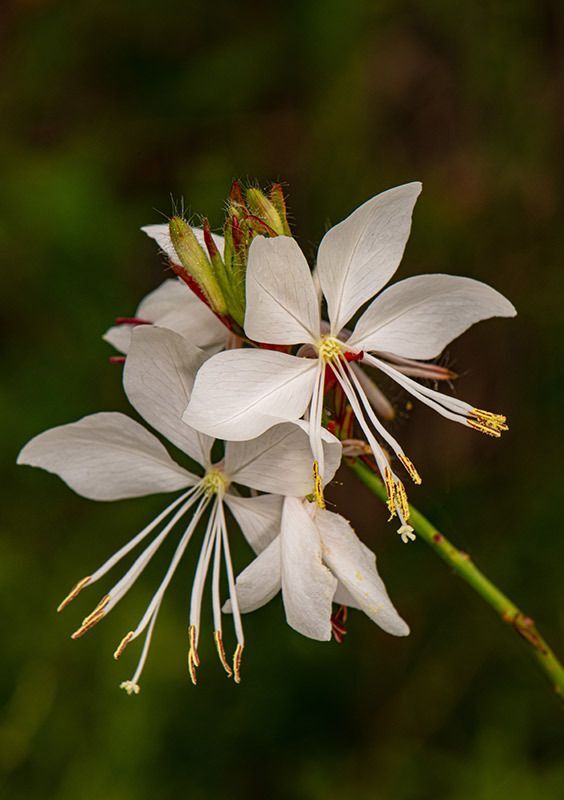
White Gaura

Oenothera lindheimeri
Family: Onagraceae (Evening Primrose Family)
Flowers open in the early morning and close by midday. Can form extensive colonies. White Gaura prefers moist soil and sun to partial shade. It prefers sandy, loamy, well-drained soils, but is tolerant of a wide range of soil conditions.
- Scientific Name: Oenothera lindheimeri
- Common Names: White Gaura, Butterfly Gaura, Lindheimer's Beeblossom, Lindheimer's Gaura
- Family: Onagraceae (Evening Primrose Family)
- Growth Habit: Perennial
- Height: Up to 5 feet.
- Leaves: Thin, Segmented
- Flowers: White, Pink
- Bloom Time: April through November
- Wildlife Benefits: Hummingbirds and butterflies are attracted to the flowers. Warblers, orioles, grosbeaks, and flycatchers feed on the insects found on the plant. White Gaura is a larval host for the white-lined sphinx moth (hummingbird moth).
Where to Find It
-
Interested in adding White Gaura to your garden? Check if this is in stock or add to cart to purchase directly from our Natives Nursery.
Notes
By Flo Hannah. Written for the July/August 2007 issue of The Naturalist
A native herbaceous perennial, White Gaura grows to 3-5 feet with delicate 4-petaled, butterfly-like white and pink flowers. Gaura requires full sun with medium to wet watering. It prefers sandy, loamy, well-drained soils. Since gaura is native to our coastal prairies, it tolerates heat, humidity and some drought. Gaura is known for its long bloom period, lasting from spring to early autumn. Winnie Burkett wrote: “Gaura is a great bird plant. Hummingbirds will work the flowers, but it must also harbor lots of insects because you can also find warblers, orioles, grosbeaks and flycatchers feeding in it”.
© Joe Liggio