

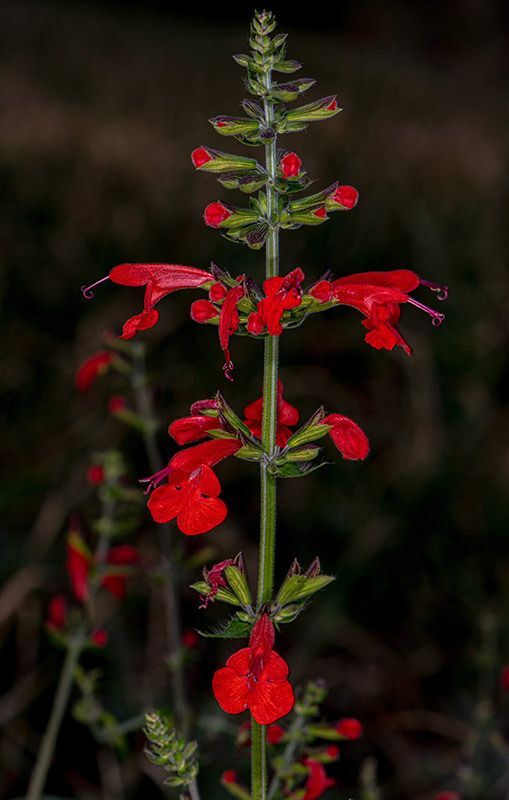
Scarlet Sage

Carl E Lewis, CC BY 2.0 , via Wikimedia Commons
Salvia coccinea
Family: Lamiaceae (Mint Family)
Scarlet Sage adapts readily to both sandy and clay soils. Blooms best in full sun but also grows in shade. Prune to keep it bushy. Flowers open in the morning and close in the afternoon. A favorite of hummingbirds. Reseeds. One of the easiest wildflowers to grow.
- Scientific Name: Salvia coccinea
- Common Names: Scarlet Sage, Tropical Sage, Blood Sage, Red Sage, Indian Fire
- Family: Lamiaceae (Mint Family)
- Growth Habit: Annual, Perennial
- Height: Up to 3 feet
- Leaves: Hairy, scalloped on the edges
- Flowers: Red, Pink, White
- Bloom Time: February through October, occasionally in winter
- Wildlife Benefits: Attracts pollinators, hummingbirds, and seed-eating birds.
Where to Find It
-
Interested in adding Scarlet Sage to your garden? Check if this is in stock or add to cart to purchase directly from our Natives Nursery.
Notes and Tips
Scarlet sage is a prolific bloomer, particularly in the spring and fall. During the heat of summer, a little additional water will help keep it blooming. Plants can be pruned to form a more compact shape, but hummingbirds and seed-eaters such as finches prefer the tall spikes of late summer and fall.
Scarlet sage is one of the few native plants that bloom in winter, making it especially desirable for those wanting to attract over-wintering hummingbirds. Provide protection during hard freezes.
Scarlet sage makes a good companion plant for Partridge Pea, a summertime bloomer. Other good choices are Gulf Coast Penstemon, Blue Mistflower, and Creeping Spotflower.
© Joe Liggio