

Little Bluestem
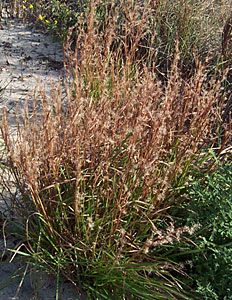
© Flo Hannah
Schizachyrium scoparium
Family: Poaceae (Grass Family)
Little Bluestem (Schizachyrium scoparium) is a native, warm-season perennial grass that plays a crucial role in the prairie ecosystems of Texas, particularly in the southeastern region. Known for its striking blue-green foliage that turns a rich copper-red in fall, this grass provides excellent wildlife habitat, erosion control, and visual interest in natural landscapes and gardens.
- Scientific Name: Schizachyrium scoparium
- Common Names: Little Bluestem, Beard Grass
- Family: Poaceae (Grass Family)
- Growth Habit: Clump-forming perennial grass
- Height: 2-4 feet
- Leaves: Narrow, blue-green turning copper-red in fall
- Flowers: Purplish-bronze seed heads in late summer to fall
- Bloom Time: August – October in Southeast Texas
- Wildlife Benefits: Provides food and cover for birds, butterflies, and small mammals
Habitat & Range in Southeast Texas
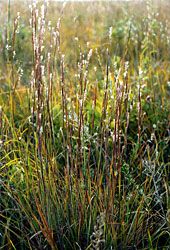
© Mike Haddock, Kansas State University
Little Bluestem is a dominant species in native prairies and open woodlands. In Southeast Texas, it is commonly found in:
- Coastal Prairies: Thrives in well-drained soils and full sun
- Pineywoods: Found in open, sandy areas with minimal competition
- Roadsides & Fields: Often seen in disturbed areas and pastures
This grass is highly drought-tolerant and adapts well to various soil types, making it an excellent choice for native landscaping and prairie restoration projects.
Ecological Importance
- Erosion Control: Its deep root system stabilizes soil and prevents erosion.
- Wildlife Habitat: Provides nesting material and cover for birds and insects.
- Pollinator Support: Hosts several skipper butterfly species and other beneficial insects.
Landscaping & Gardening Uses
Little Bluestem is a low-maintenance, visually striking addition to native gardens in Southeast Texas.
Planting & Care
- Sunlight: Full sun
- Soil: Well-drained; tolerates sandy, loamy, and clay soils
- Water Needs: Low; drought-tolerant once established
- Maintenance: Cut back in late winter to encourage new growth
- Companion Plants: Pairs well with Black-eyed Susan (Rudbeckia hirta), Purple Coneflower (Echinacea purpurea), and Texas Lantana (Lantana urticoides)
Fun Facts
- Its fall color transformation makes it one of the most visually striking native grasses.
- It was once a dominant species in Texas prairies, providing essential habitat for native wildlife.
- The fluffy seed heads help disperse seeds on the wind, aiding natural regeneration.
Conservation & Native Plant Advocacy
As urbanization reduces native prairie habitats, planting Schizachyrium scoparium supports ecosystem restoration and helps sustain local wildlife. Encouraging the use of this native grass reduces reliance on water-intensive turf grasses and enhances biodiversity.
Where to Find It
-
Interested in adding Little Bluestem to your garden? Check if this is in stock or add to cart to purchase directly from our Natives Nursery.
Notes
By Flo Hannah. Written for the September/October 2007 issue of The Naturalist.
Consider adding the native grass Little Bluestem to your garden. Along with Big Bluestem, Switchgrass, and Yellow Indiangrass, Little Bluestem is one of the “big four” grasses that comprise the North American prairie. It is visually attractive and a wonderful addition if you hope to attract more wildlife. The common name refers not only to its small 3- to 5-foot stature but also to its bluish-green stem color as it first emerges in the spring. The stems turn an eye-catching coppery-red later in the fall. As with most upland native prairie species, Little Bluestem thrives best in a sunny, well-drained site.
This grass is one of our many prairie bunchgrasses that grow in lush, green clumps all summer, blooming from late August through October. It has multiple flowering stems that branch into fuzzy C-shaped seed spikes that are a valuable food source for birds and other wildlife. The thick clumps of basal leaves offer nesting and predator protection sites for grassland birds year-round. It is also a larval food source for many species of butterflies, including the swarthy skipper and little wood satyr.
It is estimated that less than 1% remains of the 9.5 million acres of the coastal prairie which used to stretch from South Texas to Central Louisiana. Accompanying this loss is the decline of birds dependent on grasslands for nesting and foraging. Dramatic declines are seen in formerly common birds such as Northern Bobwhites (down 82%). To respond to the ongoing challenge of grassland bird population decline, add Little bluestem and other native plants to your garden, avoid planting non-native ornamentals from other continents, and please support our projects to protect and restore coastal prairie habitat