

Common Buttonbush

Monarch butterfly on buttonbush with Pickerelweed in the background © Susan Billetdeaux
Cephalanthus occidentalis
Family: Rubiaceae (Madder Family)
Common buttonbush is a large wetlands shrub. It thrives in moist soil and is tolerant of clay and poor drainage. It can be pruned to be more compact. It blooms best in full sun. It reseeds, providing a few volunteer seedlings every year.
- Scientific Name: Cephalanthus occidentalis
- Common Names: Common Buttonbush, Buttonbush, Button Willow, Honey Bells, Honeybells, Honey Balls, Honeyballs, Button-bush
- Family: Rubiaceae (Madder Family)
- Growth Habit: Shrub
- Height: Up to 15 feet
- Leaves: Green
- Flowers: White
- Bloom Time: June through September
- Wildlife Benefits: The nectar-rich blooms are highly attractive to native bees and butterflies. Swallowtail butterflies are particularly attracted to the flowers. In the heat of summer, many birds find refuge in its shady branches and feast on small insects. In the fall and winter, the seeds are eaten by many species.
Where to Find It
-
Interested in adding Common Buttonbush to your garden? Check if this is in stock or add to cart to purchase directly from our Natives Nursery.
Notes and Tips
This summer-blooming native is a woody shrub that grows to 15 feet. It grows well at the water’s edge or with its feet directly in the water, making it useful for erosion control. Buttonbush has dark green leaves that are opposite or in 3s or 4s on short petioles along the stem. The flowers are greenish-white 1-inch clusters known as globose heads. They resemble small pincushions and are possibly poisonous.
-- Flo Hannah. Written for the July/August 2007 issue of The Naturalist.
Common Buttonbush thrives in moist soil. Prune back in winter if you'd like a more compact shape. You'll generally find a few volunteer seedlings each spring, which can easily be transplanted.
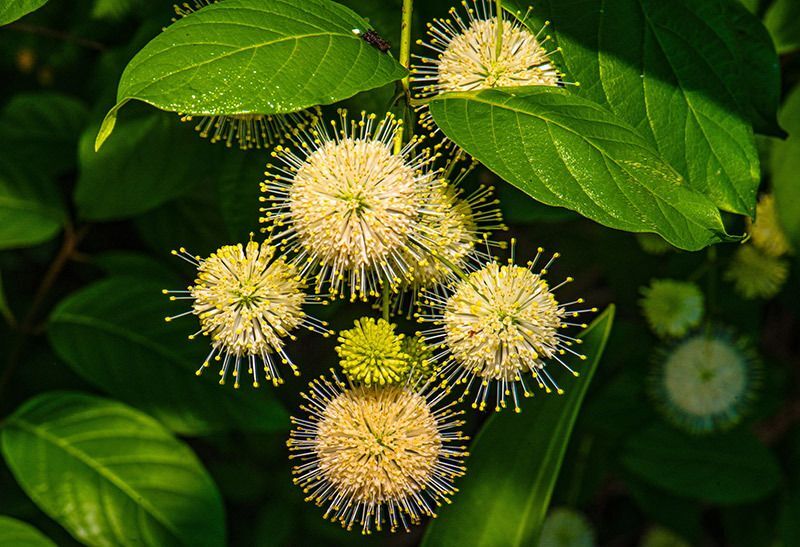
© Joe Liggio