

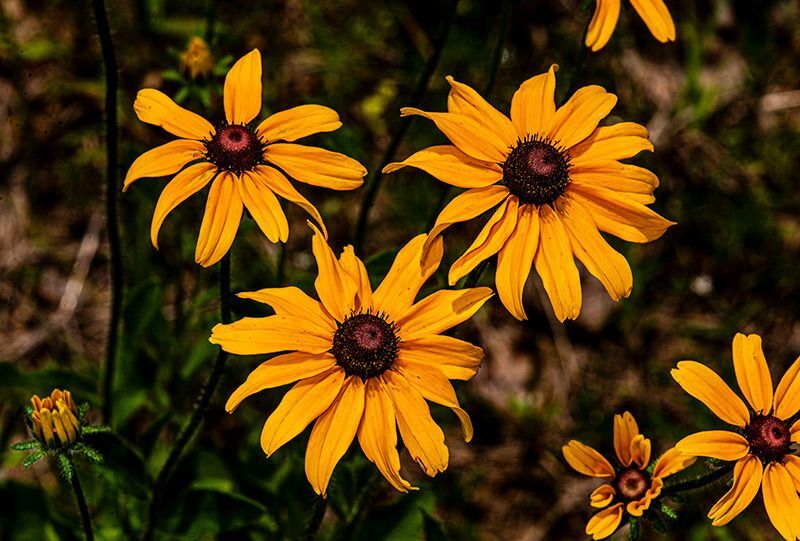
Black-eyed Susan

© Wanda Smith
Rudbeckia hirta
Family: Asteraceae (Aster Family)
Annual to short-lived perennial. Black-eyed Susans are tolerant of most soils except soggy ones. They prefer full sun. They are a very attractive garden plant where they provide masses of color for several months. Plants reseed.
- Scientific Name: Rudbeckia hirta
- Common Names: Black-eyed Susan, Common Black-eyed Susan, Brown-eyed Susan, Blackeyed Susan
- Family: Asteraceae (Aster Family)
- Growth Habit: Annual, Biennial, Perennial
- Height: Up to 3 feet.
- Leaves: Green, Rough
- Flowers: Yellow
- Bloom Time: June through October
- Wildlife Benefits: Nectar source for bees and butterflies. Larval butterfly host. The seeds are a good food source for sparrows, buntings, and other seed-eaters.
Where to Find It
-
Interested in adding Black-eyed Susan to your garden? Check if this is in stock or add to cart to purchase directly from our Natives Nursery.
Notes and Tips
For those interested in bat-friendly gardens, Black-eyed Susans are an excellent choice. Their bright yellow blooms attract moths and the bats who feed on them.
Plants spread by rhizomes to form clumps. Leave the seed heads to provide winter food for seed-eaters and for reseeding.
Black-eyed Susans are a larval host for the Silvery Checkerspot, Bordered Patch, and Painted Lady butterflies
© Joe Liggio